Why Pediatric Cancer Research Is Different
When most people hear the phrase “cancer research,” they assume all cancers are studied, funded, and treated equally.
You need to know: They aren’t.
Pediatric cancer research exists in an entirely different landscape than adult cancer research: one with fewer patients, fewer treatment options, fewer pharmaceutical incentives, and dramatically less federal funding.
And for families facing a childhood cancer diagnosis, those differences matter immediately.
Childhood cancer Is Rare. But Not Rare Enough.
Each year, thousands of children in the United States are diagnosed with cancer. Yet pediatric cancers make up only a small percentage of overall cancer cases.
That rarity creates a major challenge: research systems are often built around diseases affecting the largest populations. Adult cancers receive the majority of research attention, pharmaceutical investment, and clinical trial development because the patient populations, and thus potential markets, are much larger.
Children’s cancers don’t fit neatly into that system.
Many pediatric cancers are biologically different from adult cancers, meaning treatments designed for adults often cannot simply be adapted safely for children.
Researchers studying childhood cancers are frequently starting from scratch.

The 4% Reality
One of the most staggering realities in pediatric oncology is funding.
Only about 4% of federal cancer research funding is allocated to childhood cancer research each year.
That statistic surprises many people because childhood cancer remains the leading cause of disease-related death for children in the United States.
The result is a difficult cycle:
- Fewer researchers entering the field
- Fewer clinical trials available for children
- Slower development of less-toxic therapies
- Greater reliance on older treatment methods
For families, that can mean facing treatment plans that have not changed significantly in decades.
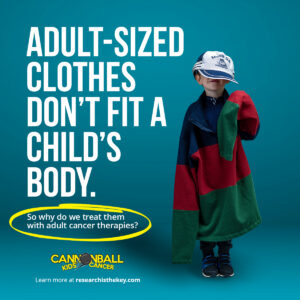
Children Are Not “Small Adults”
Pediatric cancers behave differently than adult cancers.
The most common adult cancers like lung, breast, colon, or prostate cancer, are rarely seen in children. Instead, children are more likely to develop cancers such as leukemia, brain tumors, neuroblastoma, or sarcomas.
These diseases often grow differently, respond differently to treatment, and impact developing bodies in ways adult cancers do not.
That means pediatric researchers are not simply looking for cures. They are also trying to reduce the lifelong impact of treatment itself.
Many childhood cancer survivors live with serious long-term side effects from therapies originally developed decades ago, including heart damage, infertility, hearing loss, developmental delays, and secondary cancers later in life.
Innovation in pediatric cancer research is often about both survival and quality of life.
Why Innovation Matters So Much
Because pediatric cancers are relatively rare, progress often depends on highly specialized research teams willing to pursue new ideas that may not yet qualify for large-scale federal funding.
That’s where innovation becomes critical.
Early-stage research, first-of-its-kind clinical trials, and experimental therapies can create entirely new pathways for treatment.
We focus specifically on helping fund these kinds of innovative pediatric research projects. We prioritize research designed for children, rather than adapting adult treatment approaches.
Research Moves Forward Because People Push It Forward
One of the most important things to understand about pediatric cancer research is this: Progress rarely happens automatically.
Behind every breakthrough are researchers fighting for funding, families advocating for options, physicians building clinical trials, and organizations like ours working to close gaps that traditional systems have left behind.
The future of childhood cancer treatment depends on continued innovation. Because pediatric cancer research was never just a smaller version of adult cancer research.
It is its own fight entirely.


