What Happens When Standard Treatment Stops Working?
When you think about childhood cancer treatment, do you imagine a clear path?
Diagnosis. Treatment. Recovery.
It seems simple, that’s how it should be. But for many families, that is not the reality.
Sometimes the first treatment doesn’t work.
Sometimes the cancer comes back.
Sometimes a child relapses again.
And again.
Eventually, some families hear the words no parent should ever have to hear:
“We’re out of options.”
That moment is where pediatric cancer research becomes deeply personal at CKc.
Children Can Run Out of Treatment Options
Most people do not realize that many childhood cancers have very few approved treatment options to begin with.
Some rare pediatric cancers may have only one standard protocol available. Others rely on treatments originally designed for adults decades ago. And when those therapies stop working, families are often forced into a terrifying search for anything that might help.
For families facing relapse, clinical trials are not abstract scientific research.
They are HOPE.

Addi’s Story: Eight Relapses in Five Years
Addi was diagnosed with stage four rhabdomyosarcoma when she was just three years old. Over the next five years, she endured surgeries, toxic chemotherapy, devastating relapses, and the emotional whiplash of hopeful scans followed by heartbreaking news.
Addi Sinclair fought eight relapses in five years.
By the time Addi’s family connected with a CKc-funded researcher, they were searching desperately for something different… something less brutal than the treatments she had already endured.
That treatment came through an innovative clinical trial option that could be administered at home in pill form. For the first time, Addi’s parents saw glimpses of what pediatric cancer treatment could look like: time with family, moments of childhood, and quality of life alongside treatment. Sadly, Addi passed away in December of 2020, and the world is left to deal with the brutality of her loss.
Her story reflects a reality many people never see: Children are sometimes asked to endure treatments repeatedly, even when those treatments are devastating to their little bodies.
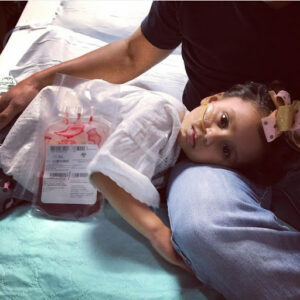
Chloe Bella’s Story: “What If This Doesn’t Work?”
For some childhood cancers, families quickly discover how few treatment options actually exist.
That was the reality for Chloe Bella and her family after she was diagnosed with juvenile myelomonocytic leukemia (JMML), a rare and aggressive childhood blood cancer.
Because JMML is so rare, there are very few specialists in the world focused specifically on treating it. Chloe’s care was guided by Dr. Elliot Stieglitz, a CKc-funded researcher who has become the leading expert in JMML research and treatment.
For Chloe’s family, innovation was not a buzzword. It was survival.
Standard treatment for JMML often includes an intensive stem cell transplant, and relapse remains a major concern for many families. Dr. Stieglitz is working to change that reality by developing more targeted approaches and expanding treatment possibilities for children diagnosed with this devastating disease.
Today, Chloe is healthy and thriving in elementary school, a future that once felt uncertain. And the research continues forward. CKc is now helping fund Dr. Stieglitz’s Phase II clinical trial work, investing in the next generation of treatment options for children facing JMML.
Research turns “there’s only one option” into “there’s still hope.”
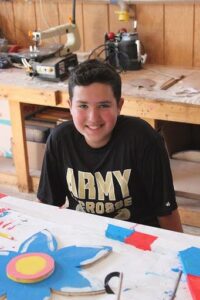
Jake’s Story: When Treatment Causes More cancer
Sometimes standard treatment works against one cancer, only to create devastating long-term consequences later.
Jake Kestler’s story reveals one of the hardest realities in pediatric oncology: the treatments that save children can also permanently alter their futures.
Jake survived leukemia after undergoing radiation and a bone marrow transplant. But years later, the radiation that helped save his life caused a secondary glioblastoma, an aggressive and incurable brain tumor.
At that point, his family found hope through a CKc-funded clinical trial.
Not because it guaranteed a cure.But because innovation created another option when standard treatment had run out and gave Jake more time with his family.
Clinical Trials Are Often Misunderstood
The phrase “clinical trial” can sound intimidating.
But in pediatric cancer, clinical trials are how progress happens.
Many of today’s standard treatments only exist because earlier families enrolled in research studies that tested new ideas, new drugs, or entirely new approaches to treatment.
Clinical trials can help researchers:
- Target cancer more precisely
- Reduce harmful long-term side effects
- Improve survival rates
- Create options for children with relapsed or treatment-resistant cancers
- Help children not just survive, but live healthier lives afterward
For families facing relapse, innovation is not about chasing something experimental for the sake of it. It is about having a path forward when traditional medicine has reached its limits.
Why Innovation Matters
At CKc, innovation means funding research that creates more possibilities for children who desperately need them.
That includes:
- First-of-its-kind clinical trials
- Targeted therapies for rare cancers
- Less-toxic treatment approaches
- Research for relapsed and treatment-resistant disease
- Early-stage ideas that may struggle to receive traditional funding
Because when a child runs out of standard treatment options, research becomes more than science.
It becomes time. Possibility. Another chance. And for families facing pediatric cancer, more time can mean everything.


